Mapping Criminal Organizations
Mapping Criminal Organizations in Mexico (www.mexicocrimemaps.org) is an original effort to generate comprehensive information about criminal operations in Mexico. The project combines qualitative and automated methods to produce a series of systematic datasets on the presence, structure, evolution, and relationships of criminal groups in Mexico. Our online platform contains maps and other visuals and provides free access to the data, its codebooks, and methodology documents.
Current data projects:
- "Mapping Criminal Organizations in Mexico: State Panel 2007-2015", https://doi.org/10.7910/DVN/N0KGCZ, Harvard Dataverse, V1.
- State-month level data on the geographic presence of criminal organizations.
- In the media: El Financiero, Mexico Today (by Reforma), IMER Noticias, Al Calor Politico, Cuestione
- "Mapping Criminal Organizations in Guanajuato, 2000-2021." Alcocer, Marco.
- Data on geographic presence, strength of presence, alliances, rivalries, and qualitative information on each criminal group.
- "Mapping Criminal Organizations in Mexico: Municipal Panel 2000-2018." Sobrino, Fernanda.
- Municipality-year data on the presence of criminal organizations.
- "Mapping Criminal Organizations in Mexico: Group Histories and Fragmentation." Alcocer, Marco and Hesles, Lucía.
- Qualtaitive dataset on all independent criminal organizations in Mexico between 2000 and 2018.
- Dyad data on relationships between criminal groups (allied, enemy, neutral)
This project has been supported by the Center for U.S.–Mexican Studies at UCSD’s School of Global Policy and Strategy, the Empirical Studies of Conflict Project, the Data-Driven Social Science Initiative at Princeton University, and the Mamdouha S. Bobst Center for Peace and Justice at Princeton University.
Leadership
- Marco Alcocer, UC San Diego and ITAM, Co-founder and Lead Investigator.
- Fernanda Sobrino, Tecnologico de Monterrey School of Government, Machine Learning Expert.
- Cecilia Farfán Méndez, Center for U.S.-Mexican Studies, Field data collection expert.
Current Research Assistants
- Lucía Hesles (ITAM, undergrad)
- Renatta Salinas Delgado (Tec de Monterrey, B.A.)
Past Members
- Patrick Signoret, Co-founder.
Past Research Assistants
- Fernanda Quintanilla (Tec de Monterrey, B.A.)
- Valeria Gonzalez Guerra (ITESO, B.A.)
- Silvia Prado (Universidad de Guanajuato)
- Jacqueline Vazquez (Universidad de Guanajuato)
Killings of Law Enforcement Officers in Mexico
Original data on killed law enforcement personnel across Mexico in 2018 and in Guanajuato between 2000-2020. See article for details.
Killings of Politicians in Mexico
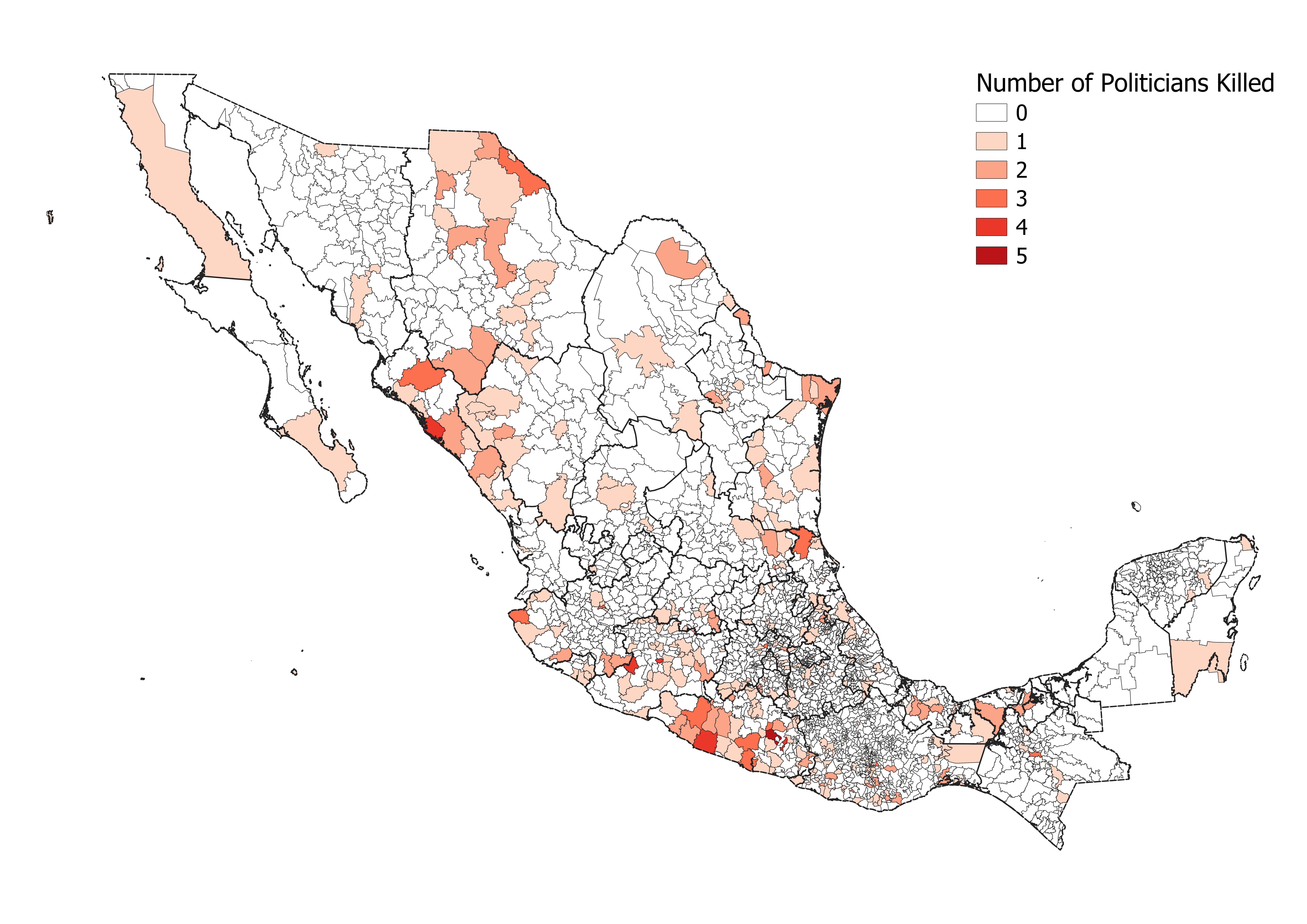
Original data on assassinated politicians across Mexico from 2000-2018. See article for details.
Queenpins
Original qualitative dataset of 44 women who led criminal organizations across 18 countries and six continents since 1850. The data provides brief case studies on each woman leader. See article for details.